Back pain can make ordinary movements feel unexpectedly difficult. A warm patch may offer gentle, localized comfort during a busy day. However, heat is not a complete treatment for every cause of back pain.
This guide explains How to use heat patches for back pain relief safely and practically. It covers choosing the right product, preparing your skin, and placing the patch correctly. Most patches should rest over clothing or according to their package instructions. Follow the label carefully. More heat is not better.
Check the skin regularly for unusual redness, burning, swelling, or discomfort. Remove the patch if any reaction appears. Avoid placing it on broken, irritated, or numb skin. People with diabetes, poor circulation, reduced sensation, pregnancy-related concerns, or chronic medical conditions should ask a healthcare professional first. Do not combine a heat patch with another heat source unless a clinician or product label permits it. Sleeping with a patch may also be unsafe for some products.
The advice below reflects common product-safety guidance and practical use. Still, individual responses vary. A patch that helps one person may irritate another. That matters. Stop using it and seek medical advice when pain follows an injury, travels down the leg, causes weakness, or comes with fever or bladder changes. Heat can soothe tight muscles, but it should not delay evaluation of serious symptoms.
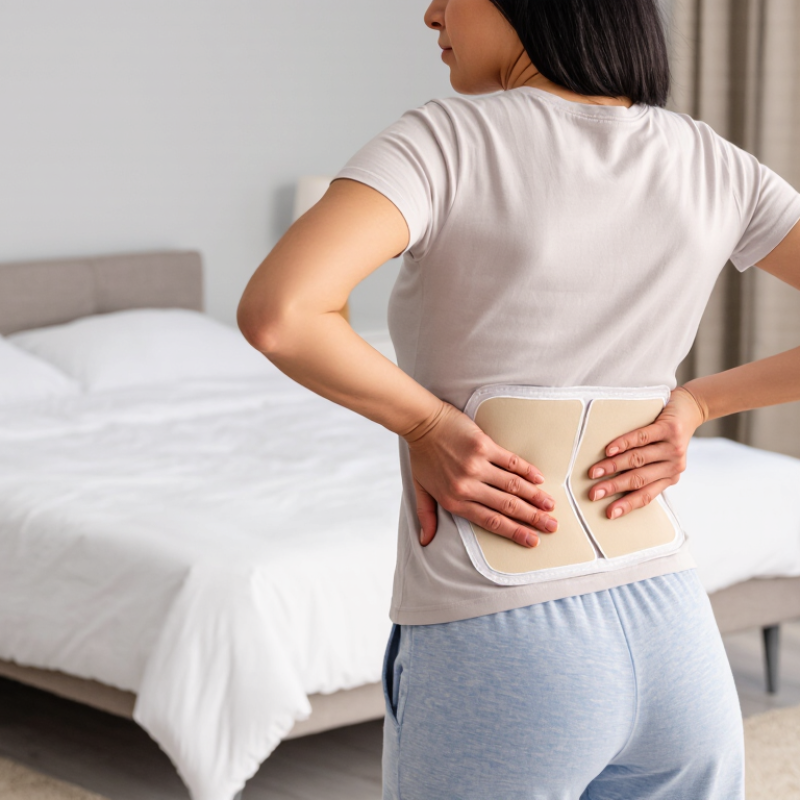
Assess Red Flags Before Heat Therapy: Follow NICE NG59 Back-Pain Guidance
7 Tips How to Use Heat Patches for Back Pain Relief?
Check for warning signs before applying heat. NICE NG59 recommends assessing possible serious causes of back pain. Seek urgent medical help for new bladder or bowel problems, numbness around the genitals, or severe leg weakness. Fever, unexplained weight loss, recent trauma, cancer history, or pain that worsens at night also needs medical assessment. Heat is not a diagnostic test. It may hide worsening symptoms temporarily.
Choose a patch with clear temperature and time instructions. Apply it to clean, dry skin, not broken or irritated areas. Keep the heat gentle, and avoid sleeping with the patch on. Do not combine it with heating creams, tight bandages, or another heat source. Check your skin after a few minutes. Remove it immediately if burning, itching, blistering, or unusual redness appears. People with reduced sensation, poor circulation, diabetes, or pregnancy should ask a clinician first. These details are easy to overlook.
Continue gentle movement when safe, because prolonged bed rest can slow recovery. A short walk may be more useful than staying still. Use heat for comfort, not to push through severe pain. If symptoms spread down the leg, weakness develops, or pain persists, arrange professional review. I sometimes underestimate how quickly skin can burn. That is an uncomfortable reminder. A patch can support comfort, but it cannot replace careful assessment or an individual treatment plan.
7 Tips for Using Heat Patches for Back Pain Relief
Safety action levels before and during heat therapy, aligned with red-flag assessment principles in NICE NG59.
How to read this chart: “Routine” means heat may be considered when no warning signs are present; “Caution” means checking suitability or stopping if symptoms worsen; “Urgent assessment” means seek medical advice before using heat. Heat should not delay assessment of potentially serious back-pain symptoms.
Source: NICE guideline NG59, Low back pain and sciatica in over 16s: assessment and management. Heat patches are not a substitute for clinical assessment or treatment.
Choose FDA-Cleared Patches and Check the Label’s Maximum Wear Time
7 Tips How to Use Heat Patches for Back Pain Relief?
Heat patches can ease muscle stiffness and mild back discomfort. Choose a product with FDA clearance when applicable, and read every label carefully. Clearance supports appropriate design and safety review, but it does not guarantee relief for everyone.
Check the ingredients, intended body area, and warnings before opening the package.
Follow these practical tips.
Apply the patch to clean, dry skin without cuts or rashes. Keep it flat, and avoid folding or placing it under tight clothing.
Never combine it with a heating pad, hot bath, or warming cream.
Watch the clock. The label’s maximum wear time matters more than personal preference. Remove the patch promptly, even if it still feels warm.
Do not sleep with it unless the instructions clearly allow that use.
Check your skin after removal.
Redness, burning, swelling, or blistering means stop using the patch and seek medical advice if symptoms persist.
People with diabetes, reduced sensation, poor circulation, or sensitive skin should ask a healthcare professional first. Pregnancy also deserves professional guidance.
Heat may feel soothing, yet persistent, severe, or radiating back pain needs medical assessment.
I used to think stronger heat meant faster relief, but that assumption can lead to skin injury. Gentle warmth is safer. Read the label again.
Apply Heat Safely: Keep Skin Temperature Below the 43°C Burn-Risk Threshold
7 Tips: How to Use Heat Patches for Back Pain Relief?
Apply Heat Safely: Keep Skin Temperature Below the 43°C Burn-Risk Threshold
Heat patches may ease muscle tightness, but warmth can become a silent injury. In practice, many users notice discomfort only after prolonged contact. Keep these seven habits in mind. Choose a patch with clear temperature guidance. Apply it over clothing when the instructions allow. Keep skin temperature below 43°C, the burn-risk threshold. A household thermometer may help, but it cannot measure every skin area accurately. Check the skin after 10 to 15 minutes. Remove the patch immediately if you feel burning, stinging, numbness, or unusual pain.
Avoid broken, irritated, infected, or numb skin. Do not use heat patches while sleeping. Avoid combining them with heating pads, hot water bottles, tight bandages, or warming creams. Move gently, and change position instead of pressing your back against hard surfaces.
Older adults and people with diabetes, poor circulation, or reduced sensation should ask a healthcare professional before use. Children may also need specific medical advice.
Redness can be easy to dismiss. I once underestimated mild tingling, and stopping earlier would have been wiser. If redness lasts, blisters appear, or swelling develops, cool the area with clean, lukewarm water and seek medical advice.
Stop self-treatment if pain follows an injury, travels down a leg, or comes with weakness, fever, or bladder changes. Heat can comfort sore muscles, but it cannot explain every cause of back pain.
Time Treatment Carefully: Use 15–20 Minutes for Supervised Heat Sessions
7 Tips: How to Use Heat Patches for Back Pain Relief?
A heat patch may ease muscle tightness, but timing matters. The American College of Physicians lists superficial heat as an option for acute or subacute low back pain. A Cochrane review of nine trials involving 1,117 participants found modest short-term relief from continuous low-level heat. Evidence supports comfort, not a cure.
For a supervised session, begin with 15–20 minutes. Place the patch over clothing unless its instructions state otherwise. Check the skin after five minutes. It should feel warm, never sharp or burning. Remove it immediately if redness, stinging, numbness, or blistering appears. Do not sleep with a heat patch, exercise intensely, or combine heat with another warming product.
I once assumed hotter meant better. It did not. Gentle warmth worked more comfortably. People with diabetes, reduced sensation, poor circulation, or fragile skin should ask a healthcare professional before use. Pregnancy also deserves individual medical advice. Do not apply heat over broken skin, infection, or unexplained swelling. If back pain follows a fall, spreads down the leg, causes weakness, or affects bladder or bowel control, seek urgent medical assessment. Recheck your routine after each session. The safest plan may need adjustment.
Monitor Skin, Medicines, and Warning Signs; Stop After Any Adverse Reaction
7 Tips: How to Use Heat Patches for Back Pain Relief
Back pain affects about 619 million people worldwide, according to the World Health Organization’s 2023 fact sheet. Heat may relax tight muscles, but it is not risk-free. Use one patch at a time, follow the stated duration, and never sleep with it applied. Keep the skin clean and dry. Check it after 10 minutes, then regularly. Remove it immediately if the area feels unusually hot, numb, itchy, or painful. Mild warmth is expected. Burning is not.
Do not apply a patch over broken, inflamed, or recently irritated skin. Avoid combining it with creams, ointments, tight bandages, or another heat source. Heat can increase skin irritation and may affect medicine absorption. Ask a pharmacist before use if you take pain medicines or wear a medicated skin patch. People with reduced sensation, diabetes, poor circulation, or fragile skin need professional advice first. The American College of Physicians recommends superficial heat as a non-drug option for some acute or subacute low back pain, but suitability varies.
Stop after any adverse reaction. Seek medical care for blistering, spreading redness, severe swelling, or persistent numbness. Back pain with leg weakness, fever, unexplained weight loss, or bladder and bowel changes needs urgent assessment. Do not keep treating worsening pain at home. I sometimes underestimate how quickly heat builds under clothing; that is a mistake worth remembering. Use a timer. Remove it before the skin becomes uncomfortable.
7 Tips How to Use Heat Patches for Back Pain Relief? - Monitor Skin, Medicines, and Warning Signs; Stop After Any Adverse Reaction
| Tip |
What to Do |
Why It Matters |
Safety Check |
| 1 |
Read the product instructions before use. Follow the stated application site, duration, and temperature guidance. |
Heat patches differ in design, maximum wear time, and intended use. |
Do not use a patch beyond its labeled wear time or apply more than directed. |
| 2 |
Apply the patch to clean, dry, intact skin over the painful area. Avoid cuts, rashes, bruises, swelling, or irritated skin. |
Damaged skin is more vulnerable to irritation and heat injury. |
Do not place the patch directly over an open wound, infection, or recently injured skin. |
| 3 |
Check the skin regularly while wearing the patch, especially during the first use. Remove it if the skin becomes very red, painful, swollen, blistered, or unusually pale. |
Low-temperature burns and contact reactions can develop gradually. |
Stop immediately after any adverse skin reaction. |
| 4 |
Do not sleep with a heat patch, use it with an electric heating pad, or cover it tightly with extra layers that may trap heat. |
Combined or prolonged heat increases the risk of burns. |
Remove the patch before sleeping and avoid activities that reduce your ability to notice excessive heat. |
| 5 |
Ask a healthcare professional before use if you have reduced sensation, poor circulation, diabetes-related nerve problems, fragile skin, or difficulty detecting heat. |
Reduced sensation may prevent you from noticing a burn early. |
Children, older adults, and people with neurological conditions may need extra supervision or an alternative treatment. |
| 6 |
Review medicines and topical products with a pharmacist or clinician. Do not place heat over medicated creams, gels, ointments, or another medicated patch unless the instructions specifically allow it. |
Heat may increase skin irritation or alter the absorption of some topical medicines. |
Follow the directions for each medicine and disclose all prescription, non-prescription, and topical products you use. |
| 7 |
Stop self-treatment and seek medical advice for unexplained or worsening back pain, pain after a serious injury, fever, weakness, numbness, loss of bladder or bowel control, or pain spreading down a leg. |
These symptoms may indicate a condition requiring prompt assessment rather than heat alone. |
Seek urgent care for new bladder or bowel problems, saddle-area numbness, or severe/progressive weakness. |
| Important: A heat patch may provide temporary symptom relief but does not diagnose or treat the underlying cause of back pain. If pain persists, recurs frequently, or does not improve with self-care, consult a qualified healthcare professional. |
Conclusion
How to use heat patches for back pain relief begins with checking whether heat is appropriate for your symptoms. Seek medical advice first if you have severe or worsening pain, numbness, weakness, loss of bladder or bowel control, fever, unexplained weight loss, or a recent serious injury. For ordinary muscle-related discomfort, choose a properly regulated patch and read its instructions carefully, especially the maximum wear time and any warnings about sensitive skin or medical conditions.
Apply the patch only as directed and avoid placing it over broken, irritated, or numb skin. Heat should remain comfortably warm, not painfully hot; skin temperatures above about 43°C may increase the risk of burns. During supervised heat sessions, limit use to around 15–20 minutes unless the label states otherwise, and never sleep with an active patch unless specifically approved. Check your skin regularly, consider possible medicine interactions, and remove the patch immediately if you notice burning, redness, swelling, blistering, dizziness, or worsening pain.

 ProMix Medical